
DuraFlex Chimney Sweep in Parkchester: A Homeowner’s Guide
DuraFlex isn’t a brand homeowners find on their own. They find it on a quote, often with no explanation of why it costs more than a standard liner or what they’re actually paying for. A flexible stainless liner is one of the most durable retrofit fixes for an aging masonry chimney in Parkchester, but only if it’s sized, terminated, and connected correctly. That last part is where cheap installations fall apart, so this guide covers what DuraFlex is, what it solves, and how to check the work. If you’d rather not climb on the roof, call (855) 550-7313 for a sweep and inspection.
What Actually Is a DuraFlex Liner?
A DuraFlex liner is a corrugated stainless steel flue liner. Instead of a rigid section of pipe, it’s a continuous, flexible tube that can be fed down an existing chimney and shaped around the flue’s bends.
Here’s why that matters in Parkchester. A lot of the masonry chimneys in this neighborhood date to the 1930s and 1940s apartment blocks and the older houses around the Oval. Their flues were often built with an offset, a jog where the mason shifted the flue to clear a doorway or joist. A rigid liner can’t make that turn. A flexible one can.
What Problem Does DuraFlex Solve?
It solves one of the most common failures we see in Parkchester: a clay tile flue that has cracked joints, gaps between tiles, or a chimney with no liner at all.
A damaged flue leaks combustion gases into the structure. It lets creosote and moisture into the masonry. And when a clay tile joint fails, the fix used to mean chipping out tile, which was expensive and disruptive. A durable flexible liner in corrosion-resistant stainless steel solves the problem another way: it creates a new, continuous flue inside the old one.
That’s why you see it on a quote. The cost reflects the material, the sizing work, the top termination, and the connection at the appliance. It isn’t just a tube. If the installation is done badly, a brand-new system can be worse than the old one.
Why Flexible Beats Rigid in Older Parkchester Buildings
Rigid liner works well in a straight, clean flue. Older masonry rarely cooperates.
- Offsets and jogs. Flexible liner follows the existing path when a rigid section won’t.
- Smaller footprint. Corrugated stainless steel takes up less flue width, which can matter when installers are working inside an existing tile chase.
- Continuous run. Fewer joints mean fewer places for gas and condensate to escape.
- Tighter clearances. It works in flues where a rigid section simply won’t fit.
In our experience, the right answer depends on the geometry of the chimney, not the price tag on the material. The point is to size the liner correctly for the appliance and run it continuous from the appliance to the top. That’s where the sizing conversation starts.
Which Appliances Is DuraFlex Approved For?
This is the distinction most homeowners don’t know to ask about, and it can be the difference between a system that works and one that fails.
Liner systems are rated for specific fuel types and temperature ranges. Wood and gas service use very different liners. A liner approved for a wood-burning appliance isn’t automatically approved for a gas or oil appliance, and vice versa. Installing the wrong one can void the appliance manufacturer’s instructions and, depending on the setup, create a real safety problem.
Before any liner goes in, we confirm three things:
- What’s the appliance? Wood, gas, or oil. Each has its own approval requirement.
- What’s the flue dimensions and height? That drives sizing.
- What’s the condition of the existing masonry and crown? The liner doesn’t fix a cracked crown or a chimney that’s open to a masonry failure.
The DuraFlex product line is specified for specific fuel and temperature ratings. The installer has to check the appliance match against the product literature. If a quote doesn’t mention which appliance the liner is rated for, ask. That’s not an upsell question. It’s the whole thing.
How Bad Sizing Creates Draft Failure in a Brand-New System
This is the failure that surprises people. The liner is new, the appliance is new, and the chimney still smokes.
Draft depends on the relationship between flue size, height, and the appliance’s exhaust. Oversize the liner and the exhaust cools before it reaches the top. Undersize it and it can’t carry the volume. Either way, you get incomplete combustion, smoke spilling into the room, and a system that never draws the way it should.
That’s why the sizing step matters more than the brand on the box. The National Fire Protection Association standards address vent sizing and installation, and a proper installer works to them, not to a rule of thumb. If your quote is missing the appliance specs, the flue’s measured dimensions, and the height of the run, it’s incomplete.
What a Finished DuraFlex Installation Should Look Like
You don’t have to be on the roof to check the parts that matter. Two points tell you the most about the install quality: the top termination and the appliance connection.
At the top termination:
- A proper cap that keeps rain, animals, and debris out
- A sealed, secure attachment to the crown
- The liner visible and correctly trimmed, not flapping
- A crown that isn’t letting water run behind the liner
At the appliance connection:
- A secure, sealed connection between liner and appliance
- No gaps where smoke or gases can escape
- The right adapter for the appliance type
- Proper clearances from combustible material
We bring the right material for the repair, not whatever’s on the truck. If a completed install has a gap at the top or a loose connection at the appliance, ask for it to be corrected before anything is signed off.
What Cleaning Protocol Applies After Installation?
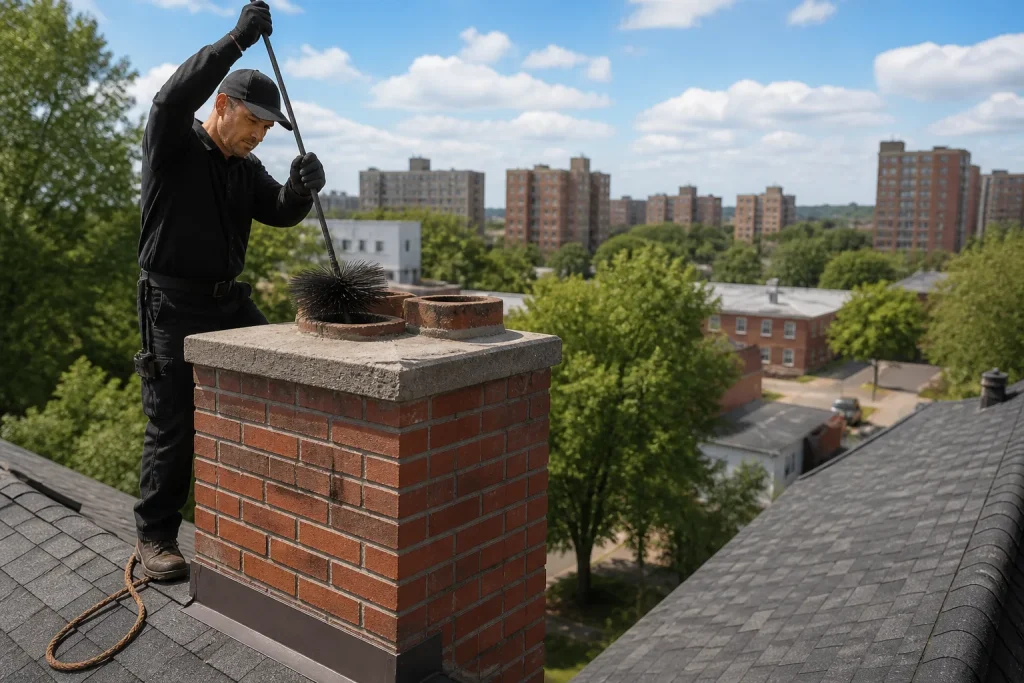
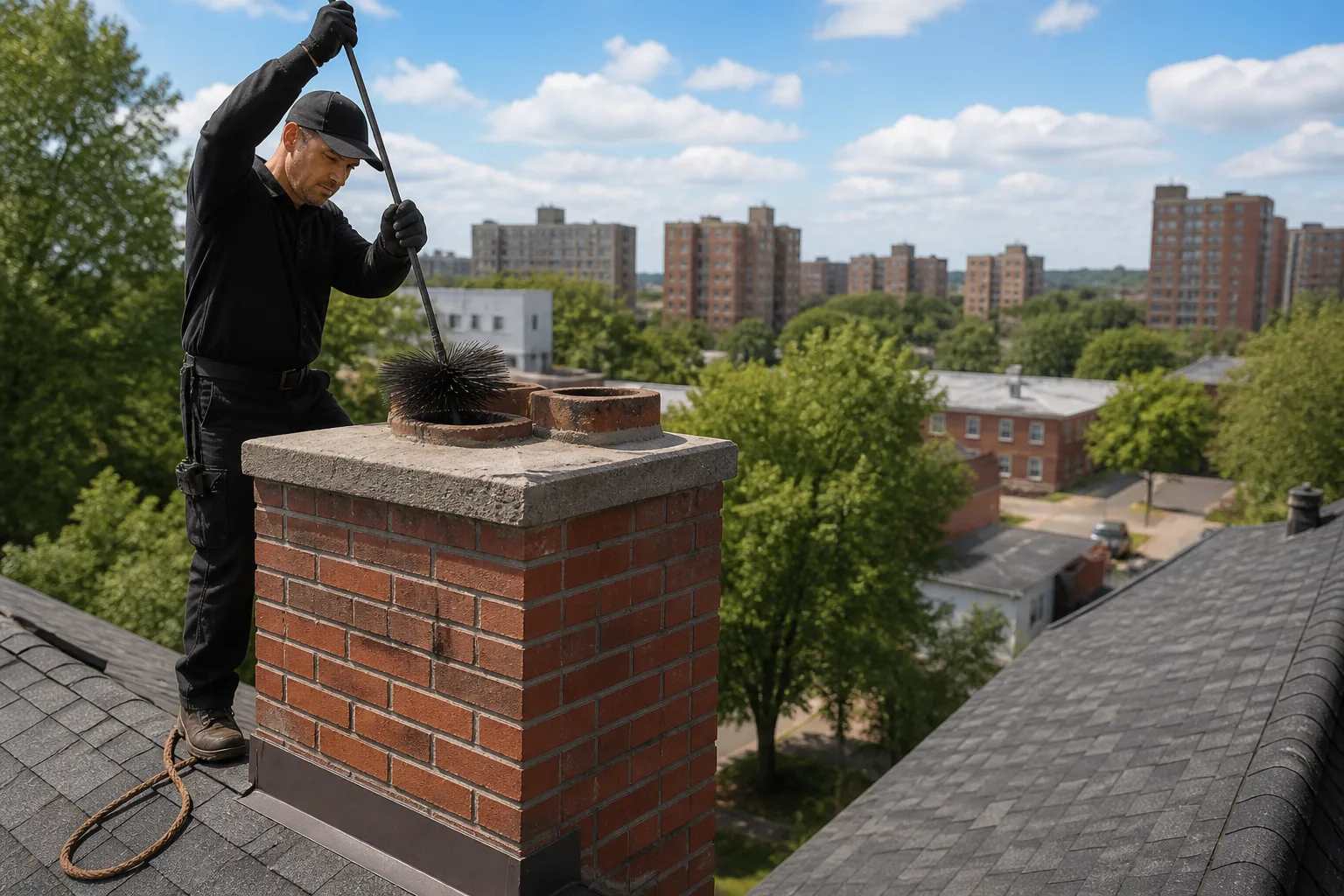
After a DuraFlex install, the cleaning approach is not the same as for a traditional tile-lined flue. Stainless steel corrugated liner cleaning requires plastic or poly brushes made for stainless steel. Wire brushes can scratch the liner and create micro-failures over time. A standard tile-flue brushing that works fine on clay can be the wrong tool on stainless.
That matters for anyone scheduling a routine sweep. If you don’t know what’s in your flue, a sweep without an inspection only tells you half the story. An inspection confirms the liner type, the appliance rating, and the install quality so the right method and tools go to the right flue.
When to Call a Pro
Call a trained chimney professional rather than touching the flue yourself if you notice any of the following:
- Smoke backing into the room when you light a fire
- A cracked crown or visible masonry damage
- Soot falling into the firebox
- A flue that hasn’t been inspected in years and no known liner
- Any signs of moisture inside the chimney
Chimney work is not a DIY job: heights, carbon monoxide, and hot creosote are all real risks, and an incorrect installation can fail in ways you can’t see from the ground.
Related services in Parkchester: a full chimney sweep confirms what’s in your flue, chimney cap & crown work protects the liner at the top, and chimney repair handles the masonry around it. If you’re exploring the full picture, our Chimney Sweep Parkchester page covers where to start.
The Bottom Line
DuraFlex is a genuine improvement for aging masonry flues in Parkchester, and the material is only half the story. Sizing, the appliance match, the top termination, and the connection all decide whether the system works. Before any liner goes in, insist on:
- A pre-install inspection with photos you can see
- Sizing based on the appliance and measured flue
- Confirmation the liner is rated for your fuel type
- A finished install you can inspect at the top and the appliance
- A cleaning plan appropriate for stainless steel
We work exclusively on chimneys and fireplaces. Our technicians have up to 8 years of experience, and we use professional-grade liner systems including DuraFlex, plus HeatShield, Copperfield, and Famco, where they fit the job.
Not every chimney needs a new liner. A proper inspection will tell you whether you can wait, repair, or reline. If you’re in Parkchester and need help, Chimney Sweep Parkchester offers free estimates. Call (855) 550-7313 for a free estimate. We answer 24/7. Fast dispatch from 7am to 7pm, Sunday through Friday, and we’re closed Saturday.
Frequently Asked Questions
The cost depends on the flue length, the appliance, the liner size, and the condition of the masonry. Every job is different, so pricing is set per job by a written estimate after a free inspection. Call (855) 550-7313 for an exact quote.
Not every flue needs relining. If the existing flue is intact and appropriately sized, a sweep and inspection may be all you need. When we find a failed joint or unlined flue, you’ll see it on camera. A written estimate tells you what’s necessary now versus what can wait. Call (855) 550-7313.
The general guideline is annual inspection for every chimney, and cleaning when there’s a measurable buildup of creosote. Wood burners usually need more frequent cleaning than gas appliances. If you’re unsure when it was last done, an inspection is the place to start. Call (855) 550-7313.
An unlined or damaged flue lets combustion gases and creosote contact the masonry, and it’s a fire and carbon monoxide risk. That risk is real: it isn’t just an inconvenience. Call (855) 550-7313 to book an inspection.
Written by the team at Chimney Sweep Parkchester.
Need Chimney Cleaning Help?
Call Chimney Sweep Parkchester - the local pro we connect you with is licensed and insured, with free written estimates in Parkchester.
(855) 550-7313